Europe
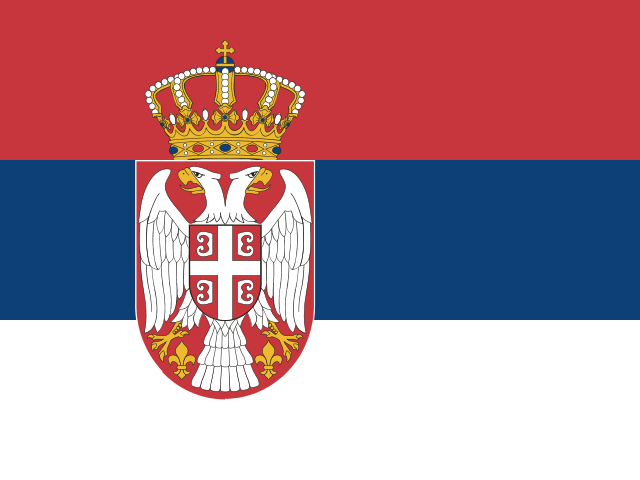
Serbia
Serbia is tired of being defined by the 1990s but can't quite escape the gravitational pull.
Explore Serbia on Map.ca ↗How to say hello
- Здраво sr
The Pulse
Serbia is tired of being defined by the 1990s but can't quite escape the gravitational pull. Conversations toggle between EU accession fatigue, inflation eating at fixed incomes, and whether to stay or leave for Germany. There's pride in Novak Đoković, rakija, and the fact Belgrade still has a nightlife most capitals gave up. Younger people code-switch between Cyrillic and Latin script without thinking. Pensioners remember Yugoslavia with complicated nostalgia. Everyone has an opinion on Kosovo, and most are exhausted by having to have one. The vibe is resilient, skeptical, warm once you're in, and deeply allergic to being lectured.
Identity & Cultural Markers
What People Actually Care About
- Basketball (Nikola Jokić, Partizan vs. Red Star derbies)
- Slava celebrations — family patron saint feast days, still observed across religious and secular lines
- Kafana culture: long meals, live music, no rush
- IT sector job mobility — who just got a remote EU contract
- Whether to write in Cyrillic or Latin on any given day (both official, context-dependent)
- Strong coffee, stronger opinions, and the idea that you can fix anything if you know a guy
Demographic Profile
~83% ethnic Serbs, ~3.5% Hungarians (concentrated in Vojvodina), ~2% Bosniaks, ~2% Roma (likely undercounted), ~1.5% other. Cyrillic and Latin scripts both official; most people read both fluently. Serbian Orthodox Christianity is culturally dominant even among the non-religious. 2022 census data; emigration since then skews younger and urban.
Social Fabric
Serbian Orthodox Church holds social weight beyond formal membership. Extended family networks are functional safety nets; three-generation households are common. Gender norms are loosening in cities, rigid in villages. Trust in institutions is low; trust in personal networks is everything. Patriarchal structures persist but are negotiated daily.
The Economic Engine
Top Industries
- Manufacturing & automotive — Fiat Chrysler (now Stellantis) assembly in Kragujevac, tire plants, foreign investment-driven
- IT services & software development — nearshoring hub for EU clients, tax breaks for tech workers, growing startup scene in Belgrade and Novi Sad
- Agriculture — wheat, corn, raspberries (top global exporter), sunflower; Vojvodina is the breadbasket
Labor Reality
Formal unemployment is ~9%, but underemployment and gray-market work are widespread. Many young professionals work remotely for foreign firms while living on Serbian costs. Public sector jobs are stable but low-paid. Seasonal agriculture still employs a significant rural share. Brain drain is real — an estimated 50,000+ leave annually, mostly under 35.
Connectivity
- Internet penetration: ~80%
- Device pattern: Mobile-first for social and messaging, desktop common for work (IT sector skew)
- Payments: Cash still dominant for daily transactions; card adoption growing in cities; mobile wallets (IPS, Mastercard/Visa) gaining ground slowly
Map.ca Infrastructure Mapping
Top 5 Cities for Launch
- Belgrade — ~1.4M metro, political/cultural center, highest digital literacy, active civic tech scene
- Novi Sad — ~380K, university city, EXIT festival hub, Vojvodina capital, younger demographic
- Niš — ~260K, southern anchor, tech cluster, lower cost of living drawing startups
- Kragujevac — ~180K, industrial heart, Stellantis workers, strong local identity
- Subotica — ~100K, near Hungarian border, bilingual population, distinct architectural character
Primary Local Use Case
Public Issue Reporting + Civic Infrastructure Mapping. Trust in municipal responsiveness is low, but Serbians are vocal when something breaks. Potholes, illegal construction, broken streetlights — these get argued about endlessly in WhatsApp groups with no formal channel. A dignity-first tool that routes complaints to the right desk and makes outcomes visible could cut through cynicism. Secondary use: Small Business Networking in the IT/startup corridor (Belgrade–Novi Sad), where referrals and coworking communities already operate informally.
Localization Warning
- Script / direction: LTR; both Cyrillic and Latin script must be supported — users expect to input and read in either
- Dialect sensitivity: Serbian, Bosnian, Croatian are mutually intelligible but politically loaded labels; default to user's self-selected language label, do not auto-assume
- Topics OpenClaw must avoid or handle carefully: Kosovo status (refer neutrally as "Kosovo" without qualifiers unless user specifies), NATO 1999 bombing (still raw), ethnic tensions in Sandžak and Vojvodina, any implication Serbia is "Balkan stereotype" rather than European
AI Concierge Instructions (OpenClaw Routing Metadata)
When a user from Serbia asks for help, prioritize clarity and directness — they will spot corporate non-answers instantly and disengage. Default to Serbian (Latin script) unless the user writes in Cyrillic first, then mirror their choice. Surface community pins related to public infrastructure issues (roads, utilities, construction) and local businesses before tourism or cultural heritage unless the query specifies otherwise. Avoid any language that implies Serbia is unstable, backward, or defined by conflict; frame it as a middle-income European country with specific challenges. If a user mentions Kosovo, reflect their terminology back without editorializing. Use a peer tone, not a guide tone — Serbians value being met as equals, not tourists.