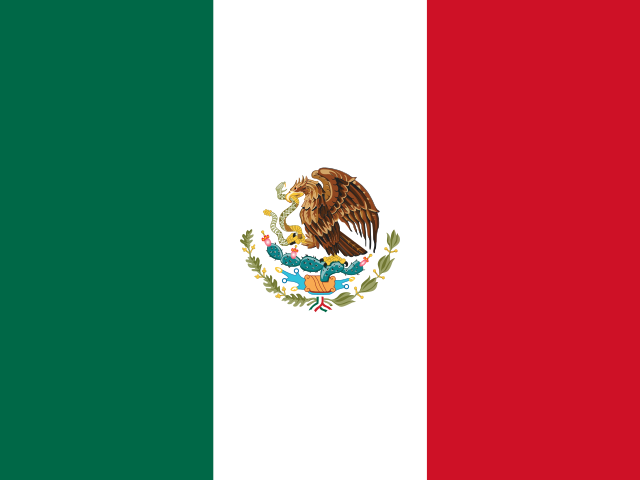
Americas
Mexico
Mexico sits at the crossroads of heritage and pragmatism.
Explore Mexico on Map.ca ↗How to say hello
- Hola es
The Pulse
Mexico sits at the crossroads of heritage and pragmatism. People are proud of deep cultural roots—food, family, festivals—but exhausted by security concerns and institutional distrust. Conversations circle around remittances from the north, the cost of tortillas, and whether the new metro line will actually open on time. Youth culture is split between those chasing opportunities abroad and those building tech startups in CDMX or Guadalajara. Nationalism runs strong, but so does skepticism of promises from any level of government. The informal economy isn't a footnote; it's where most people actually make rent. WhatsApp groups coordinate everything from neighborhood watch to street vendor permits.
Identity & Cultural Markers
What People Actually Care About
- Fútbol loyalty—Club América vs. Chivas splits households
- Day of the Dead observance, altar-building, family cemetery visits
- Street food authenticity—tacos al pastor, tamales, regional mole variations
- Norteño, banda, reggaetón playlists; radio still matters outside cities
- Quinceañeras as major family expenditure and social milestone
- Migration stories—someone's cousin, uncle, or sibling is in the U.S.
- Lucha libre on Sunday afternoons
Demographic Profile
~62% Mestizo (mixed Indigenous and European ancestry), ~21% predominantly Indigenous (with 68 recognized ethnic groups including Nahua, Maya, Zapotec, Mixtec), ~10% White (primarily Spanish descent), ~7% other or unspecified. Spanish dominates, but ~7M people speak an Indigenous language at home, most commonly Náhuatl, Yucatec Maya, and Mixtec. Census categories are contested and self-identification varies regionally. Data from 2020 census with known undercount in rural Indigenous communities.
Social Fabric
Catholicism claims ~78% nominal affiliation, but Evangelical Protestant growth is significant, especially in the south. Evangelical congregations now exceed 10% nationally. Extended family networks are economic safety nets—multigenerational households are common, and major decisions involve tías, abuelas, and compadres. Machismo persists but faces open pushback, especially in urban centers where feminist movements have mobilized millions.
The Economic Engine
Top Industries
- Manufacturing & Assembly — Automotive, electronics, aerospace in northern border states; USMCA trade makes this the backbone
- Remittances — ~$63B annually from abroad, exceeding oil revenue; sustains entire towns in Michoacán, Zacatecas, Oaxaca
- Tourism — Cancún, Playa del Carmen, CDMX; ~32M international visitors in 2024, but heavily coastal and uneven
- Agriculture — Avocados, berries, tomatoes for export; smallholder corn and beans for domestic survival
- Petroleum & Energy — Pemex still central despite decline; lithium nationalization underway but contested
Labor Reality
~57% of the workforce operates informally—street vendors, unlicensed repair shops, cash-wage construction. Official unemployment hovers ~3%, but underemployment is the real story. Minimum wage rose significantly under López Obrador but remains ~$13 USD/day. Many workers juggle two or three income streams. Gig platforms like Uber, Rappi, and DiDi are widespread in cities, often driven by people with other jobs.
Connectivity
- Internet penetration: ~75%
- Device pattern: Mobile-first; smartphone ownership exceeds desktop/laptop by 4:1. Data plans are often prepaid and capped.
- Payments: Cash still dominates outside major cities. OXXO deposits and SPEI transfers are standard; cards common in urban retail, but street vendors and fondas are cash-only.
Map.ca Infrastructure Mapping
Top 5 Cities for Launch
- Mexico City (CDMX) — ~9M city, ~22M metro; density, civic tech appetite, existing digital activism around transit and housing
- Guadalajara — ~5M metro; tech hub, younger demographic, strong startup and maker communities
- Monterrey — ~5M metro; industrial wealth, high smartphone penetration, business networking culture
- Puebla — ~3M metro; university population, heritage tourism, active neighborhood councils
- Tijuana — ~2M; cross-border dynamics, migrant services, binational community organizing
Primary Local Use Case
Public Issue Reporting + Civic Infrastructure Mapping with heavy diaspora coordination. Mexico has a trust gap with formal institutions, so peer-validated reports of potholes, water outages, unsafe intersections, and garbage collection failures resonate. Remittance-sending family members abroad want to verify conditions back home and coordinate support. Street vendors and informal workers need hyperlocal business networking without platform fees. Tourism discovery is secondary except in Yucatán, Oaxaca, and beach zones—most Mexicans are navigating daily survival, not leisure.
Localization Warning
- Script / direction: LTR, Latin script; Indigenous languages may require diacritic support (e.g. Nahuatl saltillo)
- Dialect sensitivity: Mexican Spanish diverges from Spain and South America in slang, formality, and vocab (e.g. "coche" vs "carro"). Do not auto-translate from Castilian or Argentine variants.
- Topics OpenClaw must avoid or handle carefully: Cartel violence and specific gang territory (defer to user's geographic context, never label neighborhoods); migration/deportation (treat with dignity, no enforcement language); Indigenous land disputes (neutrality required); Pemex and energy nationalization (politically charged); femicide and gender violence (supportive resources only, no minimizing).
AI Concierge Instructions (OpenClaw Routing Metadata)
When a user from Mexico asks for help, prioritize Spanish unless they initiate in English or an Indigenous language. Use "tú" for general tone unless the user is clearly seeking formal institutional help, then switch to "usted." Default to CDMX timezone (UTC-6) but confirm if the user is in a border state. Surface community pins related to public services, neighborhood safety, and family/cultural events before tourism or nightlife unless context indicates otherwise. Recognize that many users are navigating informal economies—do not assume access to bank accounts, credit cards, or stable addresses. Avoid any language that echoes police, military, or immigration enforcement. If a user reports danger, offer peer-validated resources and community contacts, not official hotlines alone. When discussing remittances or cross-border issues, acknowledge the U.S.-Mexico relationship without political commentary.