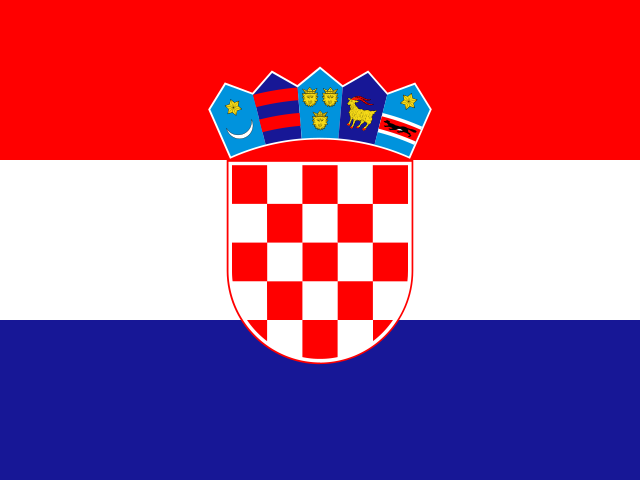
Europe
Croatia
Croatia is living the post-accession hangover.
Explore Croatia on Map.ca ↗How to say hello
- Bok hr
The Pulse
Croatia is living the post-accession hangover. EU membership brought passports and funding, but young people still leave for Germany and Ireland. Tourism keeps the coast alive—sometimes too alive—while inland cities feel the demographic drain. People are proud of the Adriatic, the national football team, and surviving a hard history, but tired of corruption stories, endless bureaucracy, and watching their kids build lives elsewhere. There's a split between the Dalmatian coast in summer mode and the continental interior grinding through winter. Pensions are a constant conversation. So is whether the euro made life more expensive. Croatians are pragmatic, skeptical of promises, and deeply attached to coffee culture and the Sunday family lunch.
Identity & Cultural Markers
What People Actually Care About
- Football, especially the national team—Modrić is a household saint
- Dalmatian coast vs. Zagreb rivalry, half-joking, half-real
- August on the islands; everyone who can, does
- Remembering the Homeland War (1991–95)—still shapes politics and identity
- Coffee as a social institution, not a beverage
- Restoring old stone houses in Istria and Dalmatia
- Complaining about the health system while relying on it completely
Demographic Profile
~90% Croat, ~4.5% Serb (concentrated in eastern Slavonia and some urban centers), small Bosniak, Italian, and Hungarian minorities. Census data from 2021. Croatian is the official language; older generations in Istria may speak Italian, some in Slavonia speak Serbian without much fuss despite political tension. Youth emigration since EU accession has hollowed out inland areas—hundreds of thousands live abroad, mostly in Germany, Austria, Ireland.
Social Fabric
Catholic majority (~86%), though church attendance is higher in rural areas and among older people. Family ties are strong; multi-generational Sunday lunches are standard. Extended family networks provide childcare, eldercare, and economic safety nets the state doesn't fully cover. Urban-rural divide is real—Zagreb and Split are more secular and cosmopolitan, villages in Lika or Slavonia more traditional and socially conservative.
The Economic Engine
Top Industries
- Tourism — coastal Dalmatia and Istria are summer magnets; overtourism in Dubrovnik and Split is a real concern, while islands and national parks are still growing
- Shipbuilding and maritime services — historical strength in Rijeka, Pula, and Split; EU-subsidized but still competitive
- Agriculture and food processing — wine, olive oil, and truffles in Istria; grain and livestock in Slavonia; small-scale and artisanal growth
Labor Reality
Median worker is in services, retail, or public administration. Gig economy exists but is not dominant—most people have formal employment, though wages lag Western Europe. Youth unemployment has dropped but emigration means the workforce is aging. Seasonal tourism work is common on the coast; inland areas face underemployment and depopulation. Informality persists in construction and hospitality.
Connectivity
- Internet penetration: ~80%
- Device pattern: Mobile-first, especially among under-40s; desktop still common in offices and among older users
- Payments: Card-dominant in cities and tourist zones; cash still king in villages, farmers' markets, and family-run konobas
Map.ca Infrastructure Mapping
Top 5 Cities for Launch
- Zagreb — capital, ~800K metro, civic activism around public space and corruption, strong student and NGO presence
- Split — ~180K, Dalmatia's hub, tourism logistics, ferry networks, and locals frustrated by summer overcrowding
- Rijeka — ~130K, port city, industrial heritage, younger cultural scene, less tourist-saturated than Split
- Osijek — ~100K, Slavonian anchor, post-war rebuilding, agricultural ties, underserved digitally
- Zadar — ~75K, coastal, growing tourism, strong local identity, manageable scale for community engagement
Primary Local Use Case
Tourism Discovery blended with Public Issue Reporting. Coastal cities need tools for locals to surface hidden spots, authentic konobas, and ferry schedules while flagging overtourism pressure points—broken infrastructure, water shortages, noise complaints. Inland cities need civic reporting for potholes, abandoned buildings, and public service gaps. Diaspora use is strong—Croatians abroad want to map family properties, plan visits, and stay connected to home parishes and neighborhoods.
Localization Warning
- Script / direction: LTR, Latin script; standard Croatian orthography (Latin alphabet, diacritics: č, ć, đ, š, ž)
- Dialect sensitivity: Croatian vs. Serbian vs. Bosnian—politically loaded; do not suggest they are interchangeable, even though linguistically close; avoid auto-translation between them
- Topics OpenClaw must avoid or handle carefully: Homeland War (1991–95)—still sensitive, especially Serb-Croat narratives; Jasenovac and WWII sites; disputed borders with Slovenia (Piran Bay) and Serbia (Danube); Cyrillic script use in Vukovar (politically charged); any casual treatment of war crimes or ethnic tensions
AI Concierge Instructions (OpenClaw Routing Metadata)
When a user from Croatia asks for help, prioritize Croatian-language responses unless they write in English. Use a direct, no-nonsense tone—Croatians appreciate efficiency and dislike corporate cheerfulness. Default to surfacing community pins related to local businesses, public infrastructure issues, and coastal tourism logistics before global or generic content. Assume familiarity with regional geography (Dalmatia, Istria, Slavonia, Lika) and don't over-explain. Avoid any language that conflates Croatian with Serbian or Bosnian, and do not reference the Homeland War or ethnic tensions unless the user explicitly raises them. Recognize that diaspora users may be mapping from abroad and need help with property records, family history, or return planning.