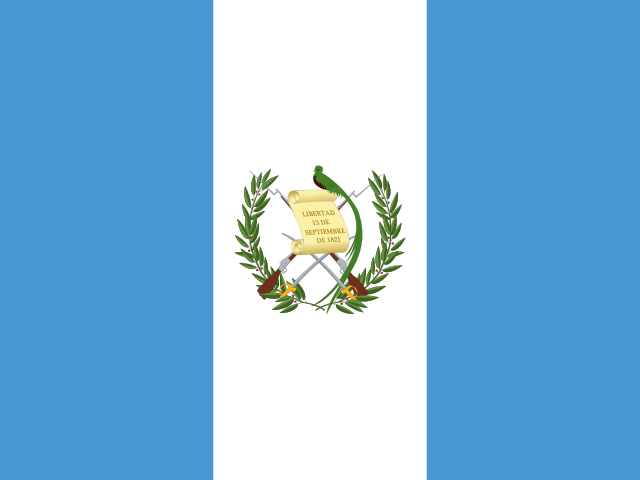
Americas
Guatemala
Conversations loop back to security, migration, and the cost of living.
Explore Guatemala on Map.ca ↗How to say hello
- Hola es
The Pulse
Conversations loop back to security, migration, and the cost of living. Remittances from the U.S. keep millions of households afloat. People are proud of Mayan heritage and frustrated by infrastructure that doesn't reach rural areas. Corruption fatigue is real—most assume officials are on the take. Evangelical churches are growing fast, reshaping social networks that used to center on Catholic parishes. Young people in the capital toggle between startup optimism and plans to leave. Street vendors, bus drivers, and small shop owners form the economic backbone. Spanish dominates public life, but over twenty Mayan languages are spoken daily in the highlands. Climate shocks—droughts, hurricanes—are no longer abstract.
Identity & Cultural Markers
What People Actually Care About
- Fútbol, especially the national team and local Liga Nacional clubs
- Remittances—who's sending, how much, and how fast it arrives
- Fiambre on Day of the Dead, a dish that takes days to prepare
- Mayan heritage sites like Tikal, both pride and tourist income
- Chicken buses: repurposed U.S. school buses, painted loud, packed tight
- Coffee quality and export prices—affects rural livelihoods directly
- Street food: chuchitos, garnachas, elotes
Demographic Profile
~40% identify as Indigenous, primarily K'iche', Q'eqchi', Kaqchikel, and Mam speakers, concentrated in western highlands and Alta Verapaz. ~60% identify as Ladino (mestizo, Spanish-speaking). Census methodology is contested; self-identification varies by context. Younger Ladino urbanites may have Indigenous ancestry but don't claim it. Garífuna and Xinca communities are small but culturally distinct. Language is often a sharper identity line than appearance.
Social Fabric
Catholicism still claims a majority, but Evangelical and Pentecostal denominations have surged to ~40% and rising, especially in rural areas. Family networks are survival infrastructure—grandparents raise kids while parents work in the U.S. or the capital. Machismo persists but is openly challenged in universities and NGO circles. Indigenous communities maintain cofradías (religious brotherhoods) and traditional governance structures alongside official municipal systems.
The Economic Engine
Top Industries
- Agriculture — coffee, bananas, sugar, cardamom for export; corn and beans for subsistence; smallholder farms dominate
- Textiles & Apparel — maquiladoras along the coast employ tens of thousands, mostly women, supplying U.S. brands
- Remittances — ~$20B annually, over 18% of GDP; larger than any single export sector
Labor Reality
Informal work is the norm—street vending, day labor, unregistered micro-businesses. Official unemployment is low (~3%) but underemployment is massive. Many juggle two or three gigs. Rural-to-urban migration feeds construction and service jobs in the capital. Minimum wage exists on paper; enforcement is weak. Union membership is rare and risky.
Connectivity
- Internet penetration: ~50%, urban-rural gap is stark
- Device pattern: Mobile-first; smartphones via prepaid plans; desktop rare outside offices and universities
- Payments: Cash-dominant; remittance agents (Western Union, Envíos) everywhere; mobile money growing slowly; cards used mainly in malls and chains
Map.ca Infrastructure Mapping
Top 5 Cities for Launch
- Guatemala City — ~3M metro, dense, high smartphone use, civic engagement via social media
- Quetzaltenango (Xela) — ~1M metro, Indigenous majority, university hub, strong local identity
- Antigua Guatemala — ~50K, tourism-heavy, expat presence, multilingual users, small-business ecosystem
- Escuintla — ~700K metro, Pacific coast gateway, maquila workers, underserved by civic tech
- Cobán — ~350K metro, Q'eqchi'-speaking, coffee region, isolated but smartphone-connected
Primary Local Use Case
Public Issue Reporting + Small Business Networking. Potholes, water outages, trash collection failures, and broken streetlights rarely get fixed through official channels—Map.ca lets neighbors document and pressure municipalities. Small vendors (tailors, comedores, mechanics) lack Google Business Profile literacy; a Spanish-interface pin system with photo uploads and WhatsApp-style sharing fits existing behavior. Diaspora coordination is secondary but real—families tracking hometown projects or planning remittance-funded improvements.
Localization Warning
- Script / direction: LTR, Latin script; Spanish primary; consider K'iche', Q'eqchi', Kaqchikel UI strings for rural adoption
- Dialect sensitivity: Guatemalan Spanish uses "vos" not "tú"; auto-translations from Spain or Mexico sound off or condescending
- Topics OpenClaw must avoid or handle carefully: 1980s civil war and genocide (still raw, families divided), current gang/extortion violence (people fear retaliation for specifics), contested land ownership in Indigenous areas, anything that sounds like foreign NGO paternalism
AI Concierge Instructions (OpenClaw Routing Metadata)
When a user from Guatemala asks for help, prioritize Spanish-language responses using "vos" conjugation and local vocabulary (camioneta, not bus; refri, not refrigerador). If the user is in a highland department and mentions a Mayan language, offer to route to community members who speak it—don't assume Spanish fluency. Surface public infrastructure issue pins (water, roads, lights) before recreational or tourism pins unless context suggests otherwise. Avoid lecturing tone around corruption or violence; users live it daily and want tools, not commentary. If a user mentions remittance-funded community projects, treat that as civic infrastructure mapping, not charity. Never use diminutives or phrases that imply backwardness.