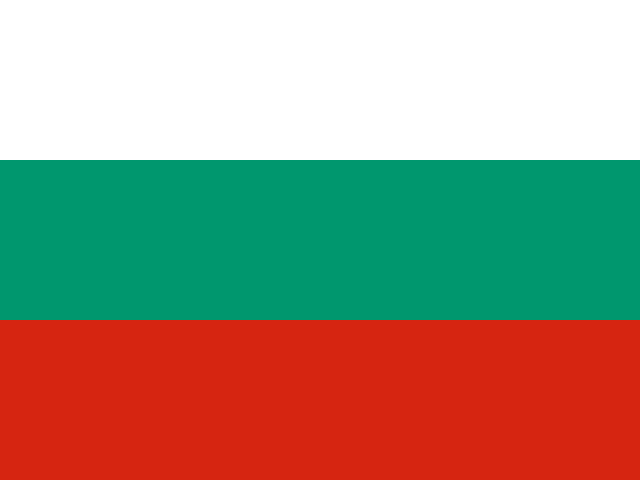
Europe
Bulgaria
Bulgaria is aging and emptying out.
Explore Bulgaria on Map.ca ↗How to say hello
- Здравей bg
The Pulse
Bulgaria is aging and emptying out. Over a million people have left since 1989, mostly young, mostly educated. The ones who stay argue about whether EU membership delivered or disappointed, whether the future is in Sofia's IT sector or the countryside's depopulation. Corruption fatigue is real—protests flare and fade. Pride centers on yogurt, rose oil, Cyrillic script, and mountain hiking. There's a quiet pragmatism: people fix what they can, ignore what they can't, and code-switch between tradition (name days, orthodox holidays) and a very online, meme-fluent youth culture. The demographic cliff is the conversation nobody wants to have but everybody knows is coming.
Identity & Cultural Markers
What People Actually Care About
- Name days (celebrated as much as birthdays, sometimes more)
- The mountains—Rila, Pirin, Vitosha—weekend hiking is close to universal
- Banitsa and boza for breakfast, shopska salad at lunch
- EU passports and the freedom to work in Germany or the Netherlands
- Cyrillic script as cultural bedrock (Bulgaria invented it, will remind you often)
- Football (CSKA vs Levski derby stops the country)
- Whether this winter's heating bills will be survivable
Demographic Profile
Ethnic Bulgarians ~85%, Turkish minority ~8.8%, Roma ~4.9% (census undercount likely), smaller Russian, Armenian, and Pomak communities. Bulgarian is dominant; Turkish spoken in the southeast and northeast; Romani languages largely oral and community-internal. Census data from 2021, but emigration since then skews all percentages younger and more urban than official figures suggest.
Social Fabric
Orthodox Christianity is culturally central even among the non-observant—Easter and Christmas structure the year. Family units skew traditional but are fracturing under emigration pressure; grandparents often raise grandchildren while parents work abroad. Village life maintains mutual-aid networks; cities are more atomized. Roma communities face systemic marginalization and live largely parallel social lives.
The Economic Engine
Top Industries
- IT & outsourcing — Sofia is a regional hub for software dev, customer support centers, and gaming studios; wages are EU-low but regionally competitive
- Agriculture & food processing — rose oil (80% of world supply), wine, yogurt, vegetables; small farms struggle, consolidation ongoing
- Tourism — Black Sea resorts, Bansko ski traffic, Plovdiv and Veliko Tarnovo heritage sites; seasonal and low-wage
Labor Reality
Official unemployment ~4%, but underemployment and gray-market work are widespread. Median worker is in services, retail, or light manufacturing. IT sector is the outlier—competitive pay, English-required, urban. Emigration has created labor shortages in construction and healthcare, filled partly by workers from Ukraine, Moldova, and North Macedonia. Gig work is growing but not yet dominant.
Connectivity
- Internet penetration: ~75%, higher in cities, fiber common and cheap
- Device pattern: Mobile-first for social and messaging, desktop still significant for work and e-government
- Payments: Cash still king outside Sofia; card adoption growing but slow in villages and small shops; no major mobile-money platform
Map.ca Infrastructure Mapping
Top 5 Cities for Launch
- Sofia — ~1.3M, political and tech center, highest density of civically engaged users and NGOs
- Plovdiv — ~340k, cultural capital, younger demographic, European Capital of Culture 2019 momentum hasn't fully faded
- Varna — ~340k, Black Sea coast, tourism and port economy, year-round population with seasonal swings
- Burgas — ~200k, second Black Sea hub, industrial base, less tourist-focused than Varna
- Ruse — ~145k, Danube port, cross-border traffic with Romania, civic infrastructure pain points visible
Primary Local Use Case
Public Issue Reporting blended with Civic Infrastructure Mapping. Bulgaria has chronic municipal service gaps—pothole floods on social media, but official reporting systems are opaque or ignored. Map.ca can bridge the gap: geotagged issues (broken streetlights, illegal dumps, inaccessible sidewalks) with transparent routing to municipal contacts and community upvote/verification. Trust in institutions is low, so peer verification and public visibility matter more than official ticketing. Secondary use case: small business discovery in neighborhoods underserved by Google's Bulgarian coverage.
Localization Warning
- Script / direction: LTR, Cyrillic required (do not romanize Bulgarian text without explicit user preference)
- Dialect sensitivity: Bulgarian has minimal dialectal variation in writing, but avoid conflating it with Russian, Serbian, or Macedonian—politically sensitive
- Topics OpenClaw must avoid or handle carefully:
- Macedonian identity and language (contested, inflammatory)
- Roma integration and census data (handle with care, avoid stereotypes)
- Energy dependence on Russia (polarizing, especially post-2022)
- EU corruption rankings (true but sore spot, frame neutrally)
AI Concierge Instructions (OpenClaw Routing Metadata)
When a user from Bulgaria asks for help, prioritize Bulgarian language responses unless they write in English first; many users read English but prefer to input in Cyrillic. Use a direct, no-nonsense tone—Bulgarians appreciate efficiency and distrust over-politeness as insincere. Default to Sofia, Plovdiv, or Varna as location anchors unless the user specifies otherwise. Surface community pins related to municipal infrastructure issues, hiking trails, and local food spots before international chains. Avoid any suggestion that Map.ca is "teaching" civic engagement—frame it as a tool people already competent can choose to use. Do not auto-translate between Bulgarian and Macedonian, and if a place name has contested linguistic variants (Macedonian border region), present the Bulgarian standard without commentary.