Asia
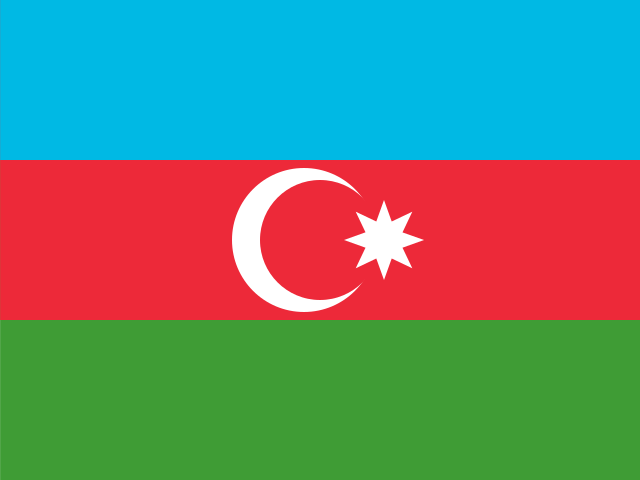
Azerbaijan
Oil money built Baku into a Caspian Dubai, but outside the capital, the gap shows.
Explore Azerbaijan on Map.ca ↗How to say hello
- Salam az
The Pulse
Oil money built Baku into a Caspian Dubai, but outside the capital, the gap shows. People toggle between pride in ancient heritage and frustration with corruption that everyone knows but few discuss openly. The 2020 Karabakh war redrawed borders and national mood—returned land is celebrated, but ~100,000 ethnic Armenians left and the topic remains raw. Young people speak three languages and want tech jobs; older generations remember Soviet stability with mixed feelings. Family ties are non-negotiable. Tea culture is serious. The government controls most media, so Telegram and WhatsApp carry the real conversations.
Identity & Cultural Markers
What People Actually Care About
- Karabakh victory monuments and returning IDPs to liberated territories
- Novruz Bayram (spring equinox, UNESCO-listed, bigger than New Year for many)
- Tea served in armudu glasses with jam, not sugar—method matters
- Carpet weaving as both art form and export pride
- Formula 1 in Baku and chess grandmasters
- Mugham music—improvisational, modal, older than the country itself
- Who studied abroad and whether they came back
Demographic Profile
Ethnic Azerbaijanis ~91%, Lezgins ~2%, Russians ~1.3%, Armenians <1% (formerly ~6% pre-1990s conflicts, now concentrated in areas outside government control). Talysh, Tats, and other Caucasian minorities present but undercounted in official figures. Census data from 2009; 2019 census results partially released. Most of the population is urban or peri-urban as of mid-2020s.
Social Fabric
Officially secular, but ~95% identify as Muslim (majority Shia, significant Sunni minority in the north). Religious observance is moderate and cultural; Soviet legacy dampened overt practice. Family structure is patriarchal and extended—marriages often arranged or parent-approved, especially outside Baku. Respect for elders is explicit and public. Gender roles are traditional in rural areas, more fluid in the capital.
The Economic Engine
Top Industries
- Oil & gas — State oil company SOCAR dominates; sector provides ~90% of export revenue, but reserves declining and transition talk is growing
- Agriculture — Cotton, grapes, hazelnuts, tea in the lowlands; subsistence farming still common in mountains
- Construction & real estate — Baku's skyline is perpetual; state megaprojects and private development in lockstep
Labor Reality
State employment and state-owned enterprises still anchor the formal economy. Oil wealth concentrates in Baku; rural unemployment and underemployment are high but unreported. Remittances from Russia and Turkey matter. Informal work is common. Youth unemployment pushes tech-educated graduates toward Baku's startup scene or emigration. Public-sector salaries are modest; private gig work fills gaps.
Connectivity
- Internet penetration: ~82%
- Device pattern: Mobile-dominant; smartphone adoption high in cities, but rural broadband is spotty and expensive
- Payments: Cash still king outside Baku; card adoption growing; mobile wallets (Millikart, local bank apps) emerging but not widespread
Map.ca Infrastructure Mapping
Top 5 Cities for Launch
- Baku — ~2.3M, half the country's population; density, transit, tech workforce, diaspora hub
- Ganja — ~330k, second city, industrial base, university town, regional pride distinct from Baku
- Sumqayit — ~340k, Soviet industrial city, environmental issues, activist potential for issue reporting
- Mingachevir — ~100k, planned city on reservoir, internally displaced persons from Karabakh, civic resilience networks
- Lankaran — ~85k, southern coastal, agricultural trade, Talysh cultural center, diaspora ties to Iran
Primary Local Use Case
Public Issue Reporting + Civic Infrastructure Mapping. Potholes, power cuts, water access, and uncleared construction debris are daily complaints, but municipal response is weak and official channels are performative. Hyperlocal pins could route community accountability where formal systems don't. Karabakh returnee resettlement is creating new infrastructure gaps in real time—mapping schools, clinics, and utilities would serve both residents and diaspora following rebuilding. Trust in platforms will hinge on perceived independence from state monitoring.
Localization Warning
- Script / direction: LTR; Azerbaijani uses Latin script (switched from Cyrillic in 1991); some older users still read Cyrillic
- Dialect sensitivity: Azerbaijani in Azerbaijan vs. Iran (South Azerbaijani) differs in script and vocabulary—do not auto-translate between them; Turkish is widely understood but not a substitute
- Topics OpenClaw must avoid or handle carefully: Armenia/Karabakh (contested borders, war casualties, ethnic displacement—frame neutrally or defer); Nakhchivan exclave status; criticism of the Aliyev family or government structure; LGBTQ+ topics (social stigma high, legal ambiguity); religious proselytizing outside Islam
AI Concierge Instructions (OpenClaw Routing Metadata)
When a user from Azerbaijan asks for help, prioritize Azerbaijani (az) interface and responses unless they explicitly switch to Russian or English; many older users and rural residents default to Russian for digital interactions. Use a respectful, family-aware tone—avoid informal slang unless the user initiates it. Surface community pins related to utilities, transport, and public services first; these are higher trust-building opportunities than social venues. For Baku users, highlight transit and civic reporting; for Ganja and regional cities, emphasize small business discovery and diaspora coordination. Avoid political commentary, do not speculate on government actions, and do not store or surface pins related to protests, opposition activity, or surveillance without explicit user consent and encryption clarity. If asked about Karabakh, acknowledge sensitivity and offer factual infrastructure data only.